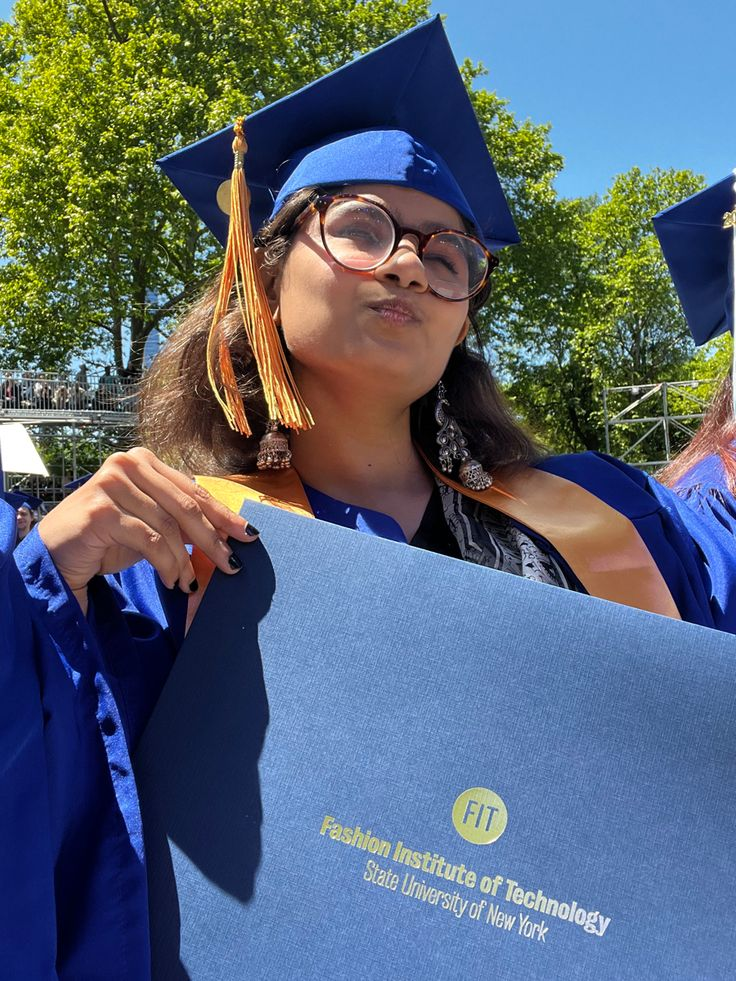
At the corner of 27th Street in Manhattan, New York, there are always a group of people dressed formally and looking hurried. Some of them are holding expensive leather samples, while others are carrying thick sketchbooks filled with drawings. This is the Fashion Institute of Technology (FIT), which is hailed as the “West Point” of the fashion industry. Many people ask me, “Is it really worth the huge expense to go to New York to obtain a FIT degree?”
As a person who has been in the New York fashion scene for several years, if I had to answer with a number, it would be: After obtaining a FIT degree, my first full-time salary was more than double what I earned before switching careers at a regular advertising company.
From “outsider” to “regular soldier”: The stepping stone behind the diploma
When I first arrived in New York, with only a passion for fashion, my resumes were sent to those clothing companies in Midtown (Garment District), but they mostly sank without a trace. The reason was simple: The fashion industry is a place that highly values “bloodline” and “connections”.
When the education section of your resume mentions “FIT”, the attitude of the HR will change subtly. This is not only because of the school’s reputation, but also because it is widely recognized in the industry: Students trained at FIT can start working on the first day. We not only learn aesthetics at school, but also learn pattern-making, fabric characteristics, and 3D modeling for CLO. This diploma does not represent theory; it represents intense professional training.
The secret of doubling the salary: Not only the degree, but also the “internal referral network”
Today, in 2026, according to industry data tracking, the average starting salary of FIT graduates is generally at a high level. Take Fashion Business Management (FBM) as an example, the starting salary of new graduates is often around $70,000 to $85,000, and alumni with several years of experience can earn an average annual salary of over $110,000.
Why is the salary so high?
Resource monopoly: LVMH, Kering, and even the high-end department store Saks Fifth Avenue, all hold special job fairs for FIT students every year.
Alumni endorsement: Your interviewer is likely to be one of your former classmates. In the fashion industry, the mutual support among alumni (Referral) is an unspoken tradition.
Geographical pressure: Compared to universities in remote areas, FIT is located in the center of New York. My internship company in my sophomore year was right across the teaching building, and the rhythm of going to work directly from class made me have 1-2 years of “practical working experience” at the moment of graduating and obtaining the diploma.
FIT diploma: It’s an academic degree, but also an “identity certification”
Many people think that fashion is just a show, but FIT taught me that fashion is a rigorous business. After obtaining the degree, I not only learned design or marketing, but also gained a context recognized by the industry. When I participated in project negotiations or interviewed with high-end brands, that confidence was something that non-professional colleges could not give.
For students who want to stay in New York or enter top companies in China’s first-tier cities, the degree certification (including the overseas study record certification) of FIT is almost an unobstructed path. It is the ultimate endorsement of your professional identity and the source of your premium ability.